
When a Student Becomes a Practitioner
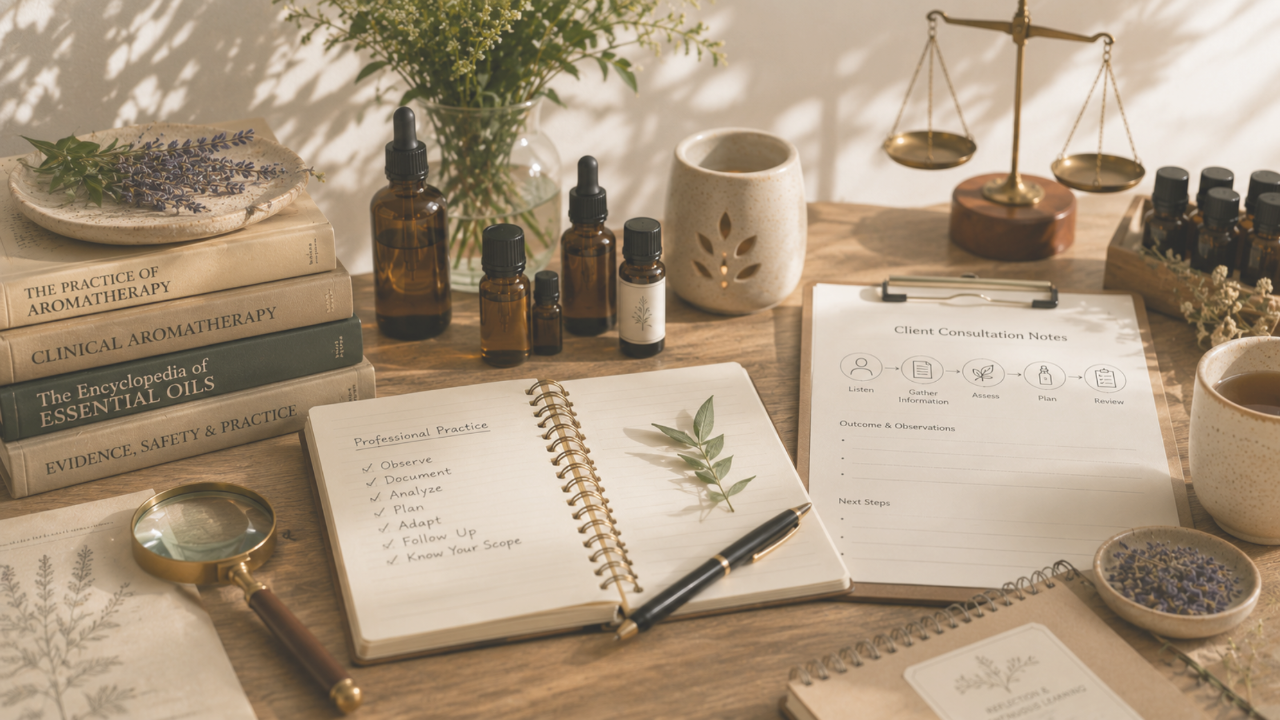
Certification adds knowledge, but that is not the only change it should create.
The deeper shift appears in the way a person responds when the situation is unfamiliar, the expected result does not appear, or something goes wrong.
A practitioner needs a process for asking better questions, reviewing the information, documenting what happened, and recognizing the limits of their role.
Scenario one: a client reports a reaction
A client messages to say that their skin became red and itchy after using a topical blend.
The immediate priority is clear: stop using the product and seek appropriate medical support if the reaction is severe, spreading, persistent, or otherwise concerning.
The practitioner then gathers information instead of guessing.
- What exactly was applied?
- Where and how often was it used?
- When did the response begin?
- What other products or exposures were present?
- What was the actual dilution?
- Which batches were used, and how were they stored?
The practitioner documents the report and reviews the formula. They do not diagnose the reaction or decide that one ingredient is responsible without enough information.
What matters is a structured response that protects the client and produces information that can improve future decisions.
This information does two things. It shapes the immediate response: if oxidation, improper storage, or a compromised batch is a possible factor, the practitioner may recommend discontinuing that batch more broadly, not just for this one client. It also becomes part of a longer record. If the same oil or blend produces a second report, the pattern itself is evidence that an isolated case was not.
Scenario two: the blend appears to do nothing
A client follows the instructions and reports no meaningful change.
It is tempting to replace the oils immediately. A practitioner reviews the original decision first.
- What outcome was agreed upon?
- Was it specific enough to observe?
- Was the route appropriate?
- Was the blend used as intended?
- Was the duration realistic?
- Did the client notice a smaller change that the original question failed to capture?
The formula may need to change. It is also possible that the expected result was too broad, the method was not appropriate, or aromatherapy was not the right support for this particular need.
Professional reasoning includes the ability to say that a blend is not the answer.
This conclusion is worth recording, not just reaching. If the outcome measure was too broad, that becomes something to define more precisely next time. If aromatherapy was not the right support for this particular need, that too is useful information for this client, and for recognizing the same pattern if it comes up again.
Scenario three: the question is outside the script
A client mentions a new medication and asks if their current blend is still appropriate.
A practitioner does not fill the silence with reassurance. They identify the question, check reliable references, and stay within their scope.
Medication questions may require input from the prescribing clinician or a pharmacist. The aromatherapist can provide useful information, including the complete formula, botanical names, dilution, route, and frequency of use.
Saying “I need to check” or “This needs to be reviewed by your healthcare professional” is part of responsible practice.
What training should change
Good training teaches more than oil profiles and formulas. It gives students repeated practice in gathering information, considering more than one explanation, explaining a decision, receiving feedback, and revising their reasoning.
Research in clinical education has found that deliberate reflection can improve reasoning in difficult cases by asking people to review the grounds for their first conclusion and consider alternatives (Mamede and Schmidt, 2023).
This matters here because a practitioner's first instinct, which may be to replace the oil or blame one ingredient, is often the least examined. Aromatherapy is a different field, but the underlying lesson is useful: the first answer should be examined when the situation is not straightforward.
The goal is to recognize when a familiar answer is no longer enough.
Beyond that, the practitioner's role does not end at the referral. Following up once the client has spoken with their prescriber, documenting what was learned, and revisiting the blend in light of that input are what turn a single careful answer into an ongoing part of the client's care.
Signs the shift is happening
You may be moving into professional practice when you can explain why each material is in a formula, document enough information to review the decision later, revise an approach without treating revision as failure, separate personal preference from professional reasoning, check a reference before making a claim, state the limits of the evidence, and refer out when the need falls outside your scope.
These are ordinary habits, and together they create a practice that is safer, clearer, and easier to trust.
A certificate is a beginning
Certification provides a structured foundation and a standard of preparation. It does not end the need for study, mentorship, documentation, and reflection.
The practitioner keeps learning because each client brings a different combination of goals, health considerations, preferences, materials, and constraints.
The shift becomes visible when knowledge can guide the next responsible step, even when the answer is not immediately obvious.
Continue your aromatherapy educationEssence of Thyme offers certification pathways for students at different stages of their education. The Professional Certification Program builds the foundation for professional aromatherapy practice. The Certified Master Aromatherapist Program supports advanced Level 3 study. The Gold Standard combines both levels into Essence of Thyme’s most comprehensive diploma pathway. Compare the programs at www.essenceofthyme.com/programs |
References
Mamede, S., and Schmidt, H. G. (2023). Deliberate reflection and clinical reasoning: Founding ideas and empirical findings. Medical Education, 57(1), 76-85. https://doi.org/10.1111/medu.14863
This clinical-education research is included for its broader lesson about deliberate reflection, not as aromatherapy research.

