
What Practice Means in Aromatherapy
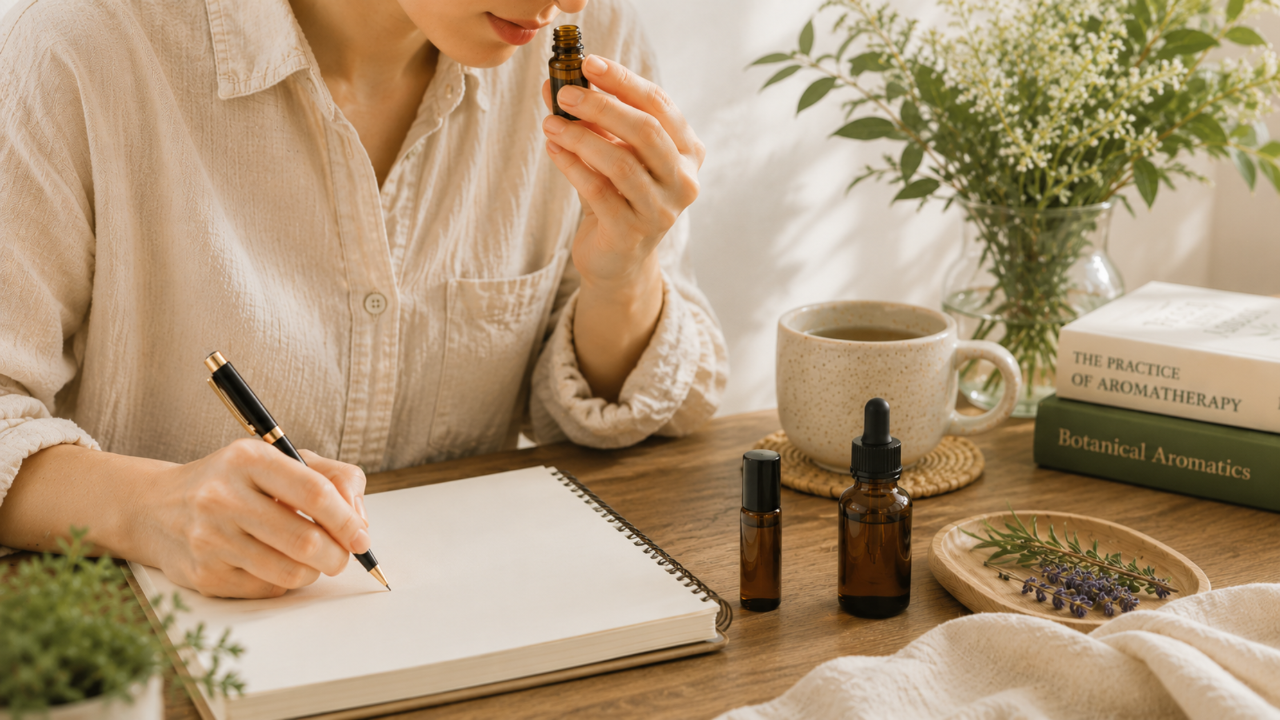
Most people who use essential oils regularly have routines. They may keep a well-stocked shelf, diffuse the same blend each morning, or reach for a familiar oil whenever a particular need comes up.
All of that can be meaningful. It does not automatically make it a practice.
Most people assume that consistency already counts as a practice. It often doesn't. A practice begins when repetition is supported by reasoning, observation, and the willingness to change. This matters most when the usual answer stops working. A blend produces no clear result. A client responds unexpectedly or a question comes up that is not covered by the recipe in front of you.
What happens next depends on the kind of practice you have built.
Owning oils gives you materials
A shelf of essential oils can represent years of curiosity and study. It gives you more materials to work with, but it does not tell you how to make a sound decision. The number of bottles you own matters less than the questions you ask before opening one.
What is the purpose of the blend?
Who will use it?
Which route is appropriate?
What dilution fits the situation?
What safety information needs to be reviewed?
What would make you reconsider the formula?
Those questions are where practice starts.
Ritual has a place
Ritual is also valuable. Using one aroma during an evening routine, preparing your workspace before blending, or pausing to smell an oil before writing your notes can create structure and meaning.
A ritual can support a practice, but the two are not the same. Ritual is built through repetition. Practice also asks what the repetition is teaching you.
A routine may continue for years because it is comforting or familiar. A practice checks if the original reasoning still holds.
Practice adds reasoning and revision
A practitioner should be able to explain why each material is in a blend, why the chosen dilution is appropriate, and what result is being observed.
The explanation does not need to sound academic. It simply needs to be clear enough that another trained person can follow the decision.
Practice also includes revision. You may review a blend you have used for years and decide that it still makes sense. You may also find that one oil is there only because it appeared in the first version of the recipe. The dilution may be higher than necessary. The instructions may be too vague. The expected result may be too broad to evaluate.
Changing the formula can be evidence that the earlier work taught you something useful.
A simple self-audit
Choose one blend this month that you make often. Write down the formula, including the botanical name and proportion of each essential oil.
- What is the specific purpose of this blend?
- Why did I choose each oil?
- What is each oil expected to contribute?
- Why did I choose this route and dilution?
- What safety considerations did I review?
- What result would lead me to keep, adjust, or stop using the blend?
Notice where the explanation becomes vague. Phrases such as “it is good for this” or “I always use it” usually point to an area that needs another look.
Use the gap as your next study question
A gap in your reasoning gives you a useful next step. You may need to revisit a monograph, check a safety reference, compare two possible oils, or review what the person actually experienced. Work on the weak part instead of replacing the whole blend without a reason.
This is how practice becomes stronger: make a decision, apply it carefully, observe what happens, document it, and review what you learned.
The process itself is simple, but consistency requires discipline.
|
Continue your aromatherapy education Essence of Thyme’s certification pathways are designed for students who want to understand the science, safety, formulation, and professional reasoning behind aromatic practice. Explore the Professional Certification Program, the Certified Master Aromatherapist Program, and The Gold Standard at www.essenceofthyme.com/programs |
References
Ericsson, K. A., Krampe, R. T., and Tesch-Römer, C. (1993). The role of deliberate practice in the acquisition of expert performance. Psychological Review, 100(3), 363-406. https://doi.org/10.1037/0033-295X.100.3.363
*This research examined expertise in other fields, not aromatherapy. It is included for the broader distinction between repetition and purposeful practice.

