
Petitgrain, Neroli, and Bitter Orange: Three Oils from One Tree
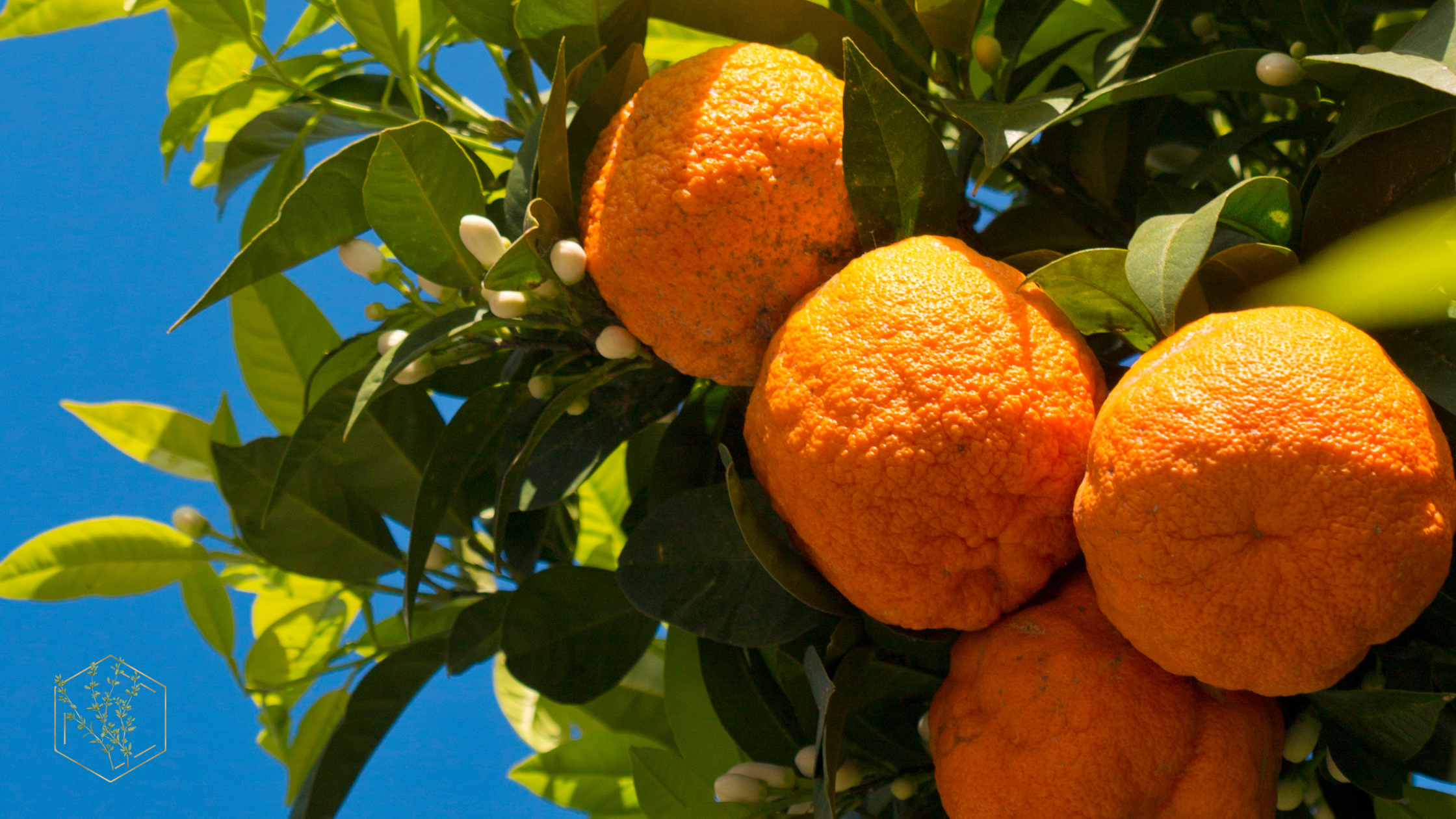
Most people are surprised to learn that three of the most beloved essential oils in aromatherapy come from the same plant. Petitgrain, neroli, and bitter orange all originate from Citrus aurantium var. amara, the bitter orange tree. What changes is which part of the tree gets distilled. The result is three distinct oils with different personalities, uses, and price points.
If you've ever wondered why neroli costs so much more than bitter orange, or why petitgrain shows up in so many wellness blends, the answer lies in the tree itself.
Different plant parts contain different chemical profiles, which is why these three oils smell, behave, and are used differently despite coming from the same species.
Bitter orange is cold-pressed from the peel of the fruit. The aroma is sharp, bright, and unmistakably citrusy, with a slightly bitter edge that distinguishes it from sweet orange. It's the most affordable of the three because the peel yields oil generously.
Petitgrain is steam-distilled from the leaves and young twigs. The aroma is green, fresh, softly woody, with a hint of floral. It carries citrus brightness but with grounding depth that the peel oil lacks. Petitgrain sits in the mid-range for price.
Neroli is steam-distilled from the delicate white blossoms. The aroma is floral, honeyed, and complex, with citrus undertones woven through. It takes roughly 1,000 pounds of blossoms to produce a single pound of neroli oil, which is why a small bottle costs what it does. Neroli is one of the most luxurious oils in aromatherapy.
How Each One Behaves
The three oils share family traits. All of them support nervous system regulation, emotional steadiness, and calm. Citrus aurantium as a whole has been studied for its anxiolytic effects, and a 2023 systematic review ranked it among the most effective essential oils for anxiety support.
Within that shared character, each oil leans in a different direction:
Bitter orange is energizing and uplifting. It works well in morning blends, kitchen diffusers, and anything that needs a fresh, bright lift. It's also a strong choice for digestive support.
Petitgrain is the bridge between activation and calm. It refreshes the mind without overstimulating, and grounds the nervous system without sedating. Useful for anyone who needs to stay focused but feels close to overwhelm.
Neroli is deeply soothing and emotionally nourishing. It's often turned to during grief, anxiety, or periods of emotional exhaustion. It also has a long history in skincare for mature and sensitive skin.
Choosing Between Them
A practical way to think about it: if you want energy, reach for bitter orange. If you want calm focus, reach for petitgrain. If you want emotional comfort, reach for neroli.
For everyday use, petitgrain is often the most versatile of the three. It captures much of neroli's calming character at a fraction of the cost, while still offering some of the brightness of bitter orange.
A Note on Photosensitivity
Bitter orange (from the peel) is phototoxic, meaning it can cause skin reactions when applied topically and then exposed to sunlight. Petitgrain and neroli, distilled from leaves and flowers rather than peel, do not carry this risk. If you're using bitter orange in a body blend, keep it off skin that will see the sun for at least 12 hours.
Want to Understand Your Oils on a Deeper Level?
The bitter orange tree is one of many examples of how much depth sits inside a single plant. Knowing where an oil comes from, how it was extracted, and how it behaves in different contexts changes how you use it.
If you're ready to move beyond the scent and learn the science, sourcing, and practice behind essential oils, explore our programs.
Learn more at essenceofthyme.com/programs

