
When Stress Shows Up in the Body
Stress doesn't just live in your head. It shows up in shallow breathing, a tight jaw, a stomach that won't settle, a racing pulse before bed. The nervous system is the connector between what we feel emotionally and what we feel physically, and when it's dysregulated, the whole body knows.
Aromatherapy has long been used to support nervous system balance, and a growing body of clinical research is starting to explain why and how.
State Anxiety vs Trait Anxiety
Researchers studying anxiety usually distinguish between two types.
State anxiety is the version you feel in a specific moment such as when you are about to do a big presentation or anticipating a difficult conversation. It rises, peaks, and eventually fades.
Trait anxiety is the version that lives with you longer-term. It's the underlying tendency to perceive situations as threatening and to respond with worry. Trait anxiety is part of how someone moves through the world over time.
Most studies on essential oils and anxiety have focused on state anxiety because it's easier to measure in a controlled setting. But more recent research is examining longer-term effects too.
A 2023 systematic review and network meta-analysis looked at randomized controlled trials across a range of essential oils and clinical settings. The researchers found that aromatherapy interventions were generally effective in reducing both state and trait anxiety. Among the oils studied, Citrus aurantium (the source of petitgrain, neroli, and bitter orange we discussed in our previous blog) demonstrated particularly strong anxiolytic effects, ranking among the most effective oils tested.
The authors suggested that essential oils may influence both emotional regulation and physiological stress responses. In plain terms, the oils seem to act on the mind and body together, which makes sense given how nervous system function bridges the two.
How This Plays Out in Daily Use
Research findings are useful, but they don't tell you what to actually do on a Tuesday afternoon when your shoulders won't drop. Here's how nervous system support tends to look in practice.
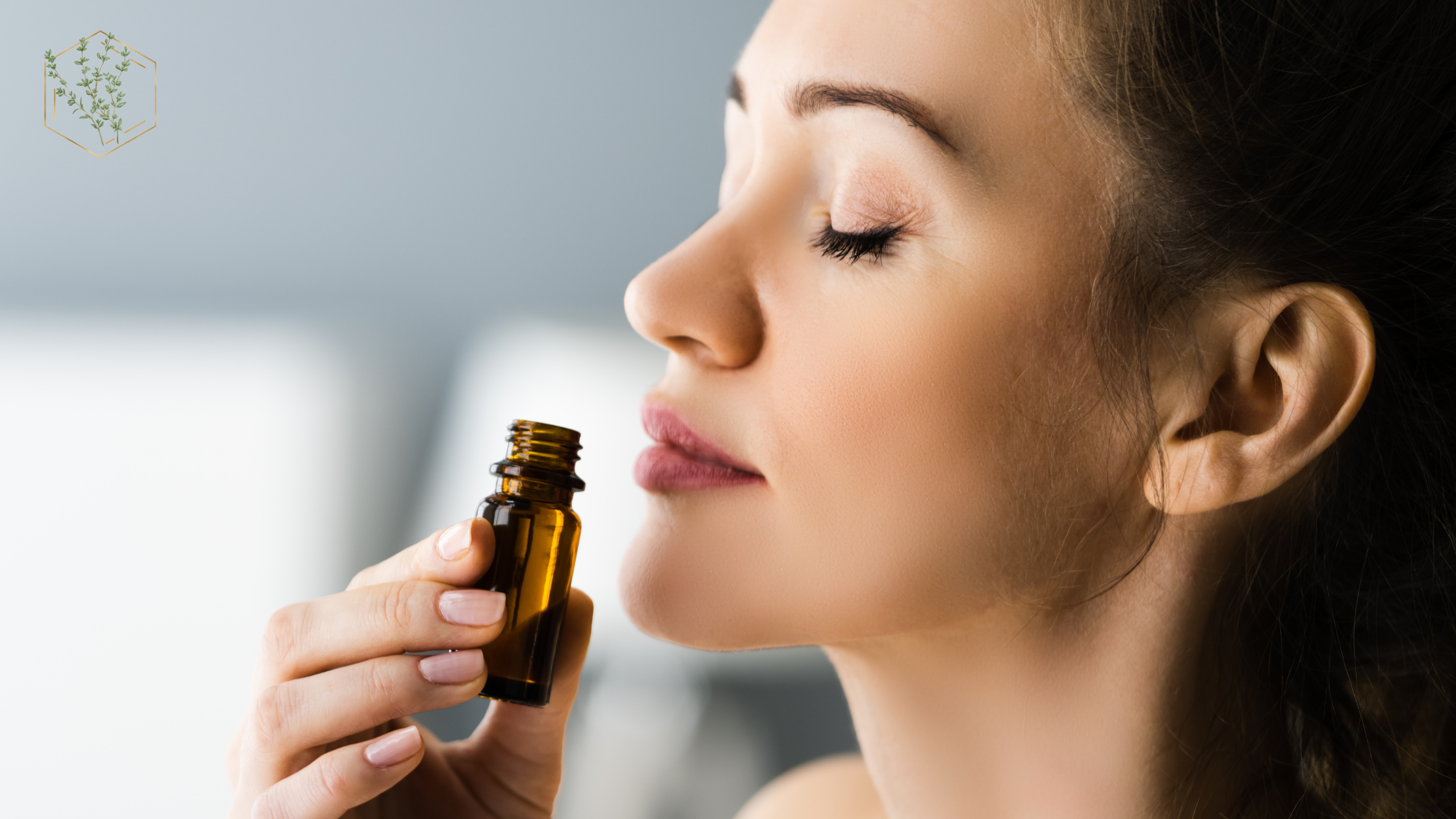
Inhalation is fast. Smelling an oil sends signals directly to the limbic system, the part of the brain involved in emotion and memory. This is why a single deep breath of lavender or neroli can shift your state within seconds.
Topical use is slower but lasting. A diluted blend applied to pulse points, the chest, or the back of the neck offers extended exposure as the oil absorbs and evaporates.
Consistency matters more than intensity. A small habit, like a few drops in a diffuser each evening, often does more than an occasional dramatic blend. The nervous system responds to repetition.
A Reminder About Scope
Aromatherapy supports nervous system regulation. It does not replace mental health treatment. If anxiety is interfering with daily life, working with a qualified mental health professional matters. Essential oils can be a complement to that care, not a substitute for it.
Want to Understand How Oils Actually Work in the Body?
The chemistry, neurology, and clinical applications of essential oils go much deeper than any single article can cover. If you want to study aromatherapy with the kind of depth that lets you support yourself and others confidently, take a look at our certification programs today.
Learn more at essenceofthyme.com/programs

