
Working with Animals Begins Before You Choose an Oil
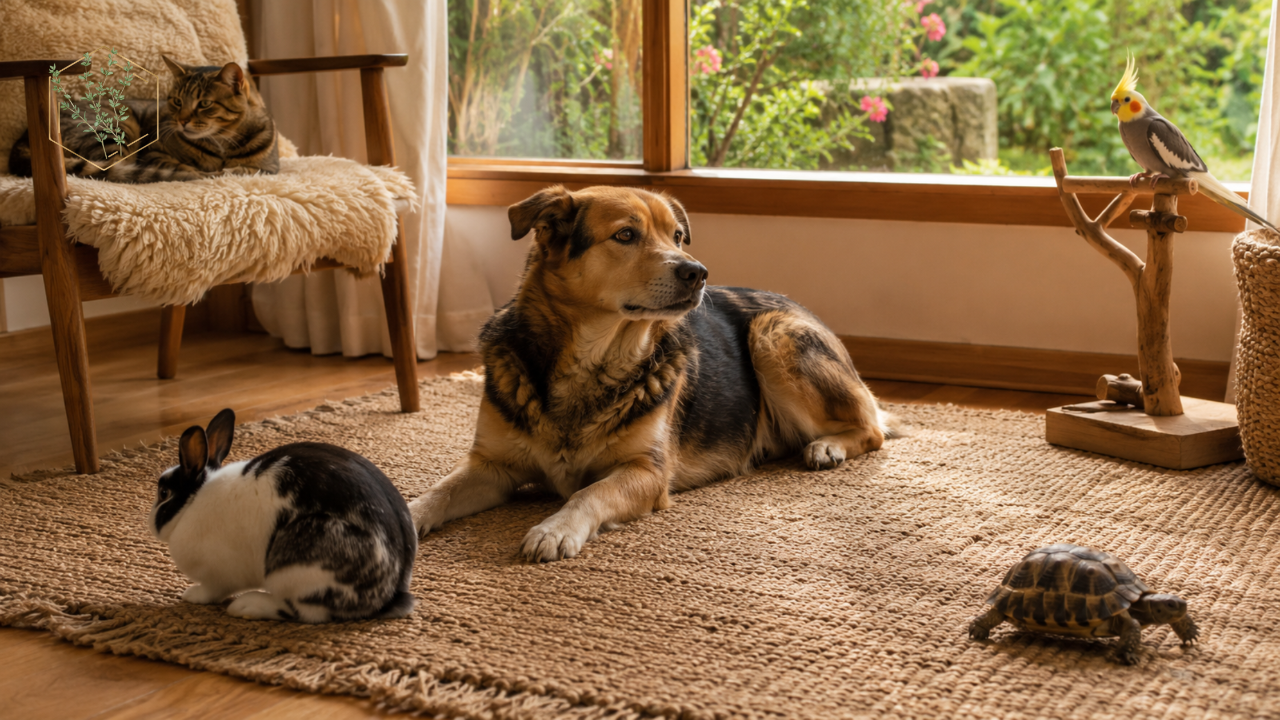
When someone asks which essential oils are safe for animals, it is tempting to answer with a list. A list feels clear and useful, but it can also leave out the questions that determine if an aromatic approach is suitable in the first place.
Which species is being considered?
What is the animal’s age and health status?
How will exposure occur?
Can the animal move away?
What changes in behaviour or physical condition would mean the interaction should stop?
The essential oil matters, but the animal and the circumstances matter just as much.
The species changes the decision
Animals are not smaller versions of humans, and animal species cannot be treated as interchangeable. Physiology, metabolism, grooming behaviour, respiratory sensitivity, body size, and living environment can differ substantially. A decision that may be considered for one species cannot be transferred casually to another.
This is why responsible animal aromatherapy begins with species-specific education. It also requires respect for professional scope and collaboration with a veterinarian when an animal’s condition needs diagnosis or medical treatment.
The route shapes exposure
Inhalation, topical application, and oral use create different exposure questions that must be considered alongside room size, ventilation, duration, concentration, the animal’s ability to leave, skin condition, grooming behaviour, and the possibility of ingestion.
A dilution chart cannot evaluate those factors for you. It may support a familiar calculation, but it cannot replace the judgment needed to determine if the route and setting are appropriate.
Behaviour is information
Animals communicate throughout an aromatic interaction. They may move closer, create distance, turn their head, become alert, soften, disengage, or show signs of distress. These responses need to be observed without forcing continued exposure.
Turning away, for example, is also an answer, and the practitioner’s preferred outcome should never become more important than the animal’s behaviour in the moment.
Recognizing overexposure is part of preparation
Before an aromatic material is introduced, the practitioner should know which signs require the exposure to stop and what response is appropriate. Preparation includes knowing when the animal needs veterinary attention and also includes keeping clear records of the material, concentration, route, timing, environment, and observed response.
Remember: this is not an extra step added after a blend has been chosen. It belongs at the beginning of the plan.
Experience Amy’s approach
For a limited period, Essence of Thyme is opening part of our Animal Aromatherapy Certification Course so students and practitioners can experience how Amy Williams DeLong, CA, teaches safety. The module addresses dilution rates, signs of overexposure and appropriate responses, inhalation, topical application, and oral use.
Amy asks students to look beyond a simple list of oils and consider the species, the individual animal, the environment, the route, and the behaviour occurring in front of them. If you want to experience that approach before deciding on the complete certification, visit this link.
You can also review the full Animal Aromatherapy Certification curriculum and learn more about studying with Amy.

